

Spotlight from our Executive Director
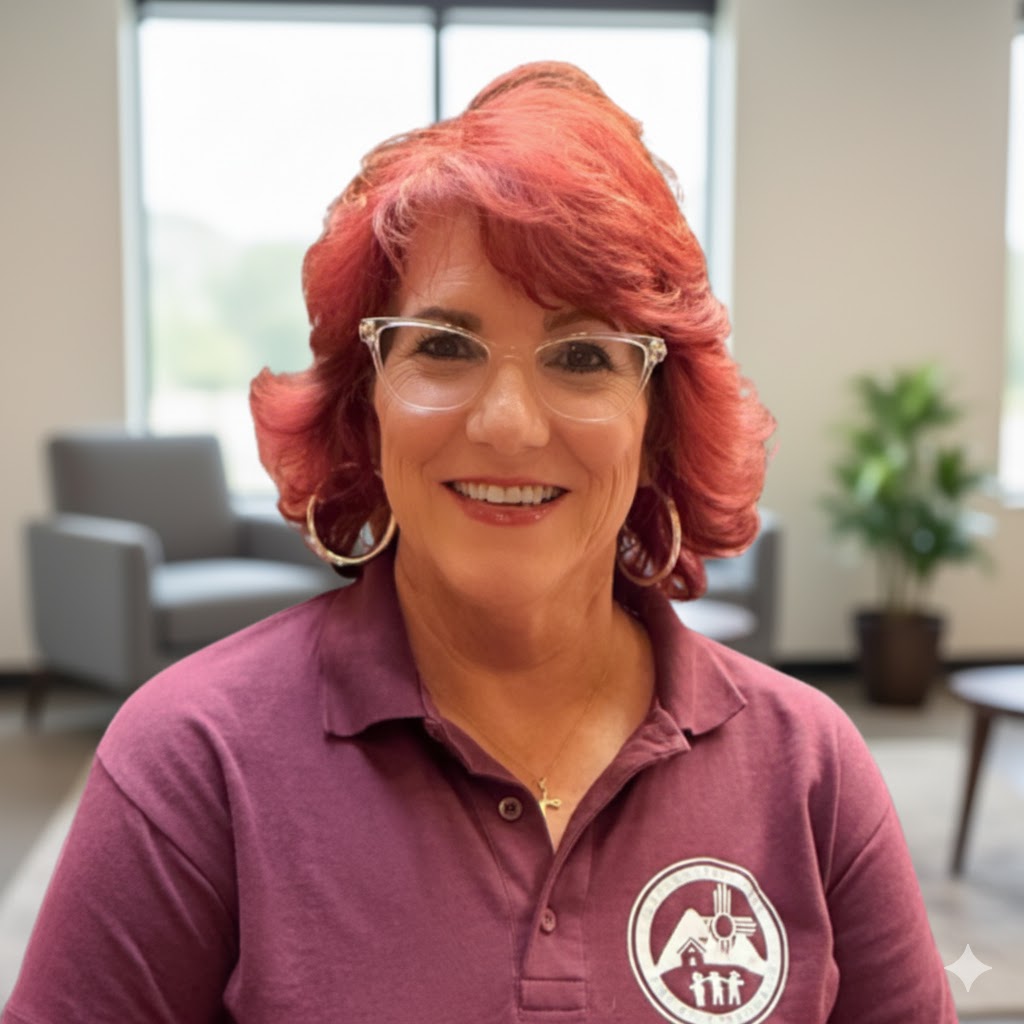
Leadership for Instructional Excellence: From Vision to Impact
Great schools do not happen by accident. They are built through intentional leadership, shared vision, collaboration, and a commitment to continuously asking one important question: Is what we are doing making a difference for students? When we talk about leadership in education, we often think first of superintendents, principals, and other formal leaders. While their leadership is essential, instructional excellence requires every adult in a school to see themselves as a leader. Leadership is not simply a position; it is a responsibility to influence the conditions in which students and educators can succeed.
Leadership Begins with a Vision for Instructional Excellence
Every successful school improvement effort begins with a clear vision. Leaders must help their teams define what instructional excellence looks like, sounds like, and feels like in every classroom.
A strong instructional vision answers questions such as:
- What do we believe every student is capable of learning?
- What should students experience every day in our classrooms?
- What practices do we expect to see consistently across grade levels and content areas?
- How will we know that students are learning?
- What support do teachers need to make the vision a reality?
SA vision cannot simply live in a 90 Day Plan or be presented at the beginning of the school year. It must become the lens through which decisions are made, instruction is supported, and progress is measured..
The role of leadership is to keep the vision visible and meaningful while providing the structures, resources, professional learning, coaching, and encouragement necessary to move from words to action.
Monitoring for Efficacy: Are We Making a Difference?
Having a vision is only the beginning. Effective leaders establish systems to determine whether the work is actually producing the desired results. This means moving beyond asking, “Did we do it?” and instead asking, “Did it work?”. Professional development was provided, but did teachers practice change?
A new instructional strategy was introduced, but did student engagement and achievement improve? A new intervention was implemented, but did students make meaningful progress? A schoolwide initiative was launched, but are classrooms experiencing the intended impact?
Monitoring for efficacy requires leaders to use multiple sources of evidence, including student achievement data, classroom observations, walkthroughs, student work, teacher feedback, and student voice. The purpose is not to “catch” people doing something wrong. The purpose is to learn what is working, identify where support is needed, and make adjustments when something is not producing the intended results.
SWREC will offer two mathematics professional learning series designed to address the different instructional needs of teachers across grade levels:
When monitoring is done well, accountability and support go hand in hand.
Leadership Means Collaborating, Not Working in Isolation
Instructional excellence is a team sport. No principal, superintendent, teacher, coach, or instructional leader has all the answers. The strongest schools create cultures where educators regularly learn from one another, examine evidence together, share effective practices, and solve problems collectively. Collaboration should not be limited to scheduled meetings. It should become part of the culture.
Teachers can ask one another:
“What is working for your students?” “What are you noticing?” “Can I see how you are teaching that?” “What do you think we should try next?”These conversations create professional communities where expertise is shared rather than protected. They also remind educators that asking for help is not a sign of weakness. Instead, it is a sign of professional leadership.
Teachers Are Instructional Leaders, Too
Every classroom teacher has leadership responsibilities. Teachers lead students by establishing high expectations, creating safe and productive learning environments, modeling lifelong learning, and believing in the potential of every child. But teachers also lead one another . When a teacher shares a successful strategy, opens the classroom door to a colleague, mentors a new educator, contributes thoughtfully during collaborative planning, or encourages a colleague who is struggling, that teacher is exercising leadership.
Parents and caregivers as partners rather than simply recipients of information, students benefit.
The question should not be, “How do we get families involved?”
Celebrate the Wins
In the pursuit of continuous improvement, it is easy to focus on what still needs to be fixed. Effective leaders also make time to recognize what is going well. Celebration is not about pretending that everything is perfect. It is about acknowledging progress. A student who once struggled is now reading independently. A teacher has implemented a new instructional practice with confidence. A grade-level team has closed an achievement gap. A principal has created a stronger culture of collaboration. A family has become an active partner in their child’s education. A school has made progress toward a goal that once seemed out of reach.
Those are wins, and wins matter.
Celebrating progress builds momentum. It reminds educators that their work matters and gives teams the energy to continue the difficult work of improvement.
Leadership Is a Collective Commitment
Instructional excellence is ultimately about people working together toward a common purpose. Leaders establish the vision. Teams monitor the impact. Teachers lead in their classrooms and alongside their colleagues. Families contribute their knowledge and partnership. Students are at the center of the work, and together, we celebrate progress while continuing to improve
The most powerful leadership question may not be “Who is responsible?” but rather: “What is my responsibility, and how can I help others succeed?” When every adult accepts responsibility for instructional excellence, leadership becomes more than a title. It becomes a culture.
And when leadership becomes a culture,every classroom becomes a place where adults are learning, students are growing, families are valued, and excellence is not simply a vision, it is the work we do every day.
The SWREC is committed to supporting excellence in leadership in the SW region. We have multiple opportunities available to teachers, school and district leaders to build their leadership capacity. Please check our homepage at swrecnm.org and sign up for one or more of these valuable opportunities.
Maximize your leadership potential with your SWREC partners.
SWREC Executive Director,
Valerie Brea
🌟 Spotlight on Instructional Excellence
August: Full Swing, High Energy, and Region-Wide Impact
August was a fast-paced, high-energy month as our partner school districts kicked off the new academic year! With schools getting into full swing, our team hit the ground running to ensure educators, administrators, and support staff were fully trained, supported, and ready to foster student achievement.
District Safety & Foundations: CPI Trainings
To start the year off with a strong focus on safety and de-escalation, our team traveled across multiple partner districts to lead Crisis Prevention Institute (CPI) trainings, equipping staff with essential tools to maintain safe and supportive learning environments.
Layer 1 Strategies for All Student Success in Lordsburg High School and DTMS
We officially launched our Layer 1 Strategies Series in Lordsburg! This initial session focused on practical, high-impact engagement techniques including:
- "Say Something" Strategies: Encouraging active processing and peer discussion.
- Accountable Talk Protocols: Building structured, respectful, and academically rigorous classroom discourse.
Welcoming & Supporting New Educators
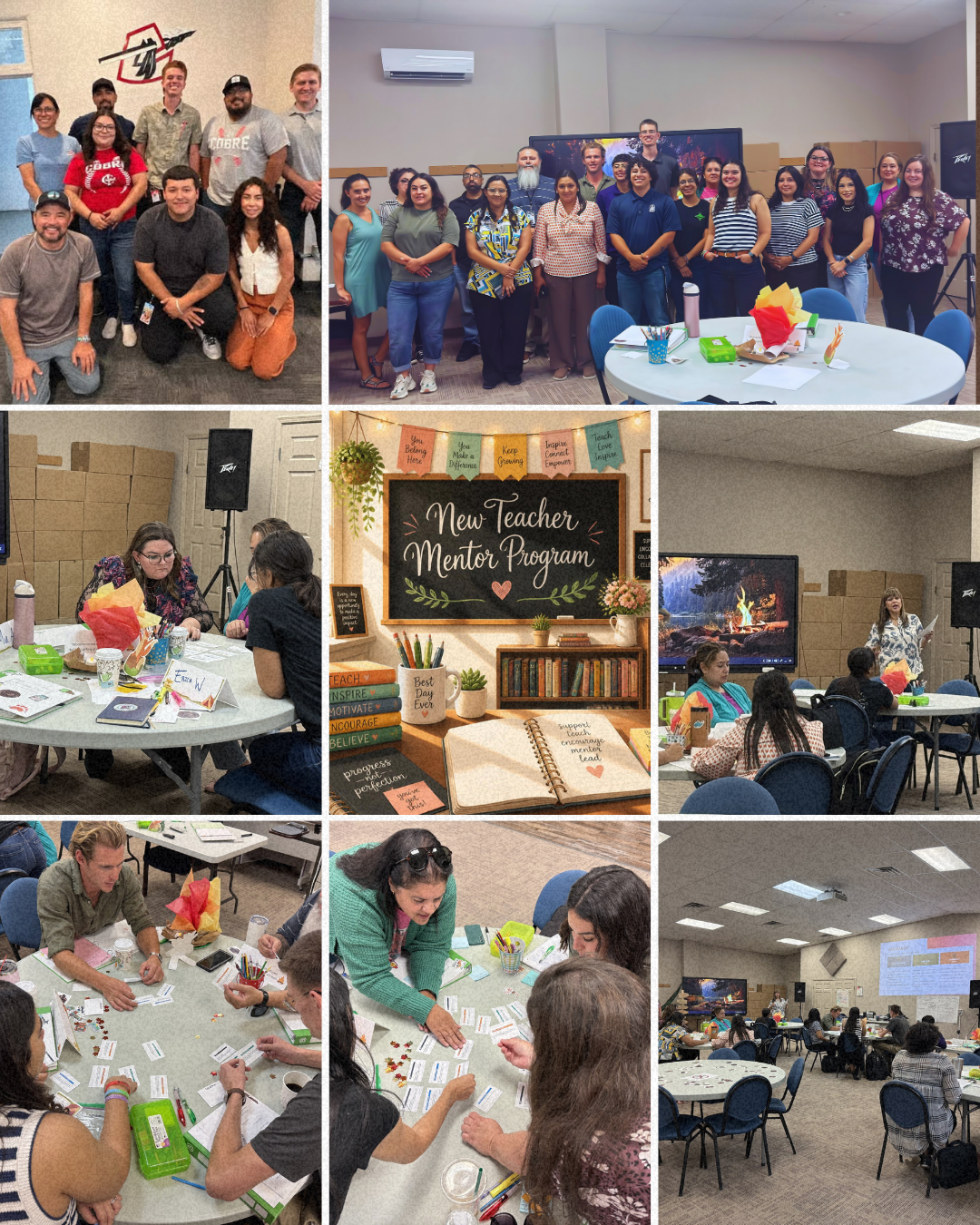
August featured robust orientation and onboarding initiatives for our newest teaching talent—both hosted at SWREC with a cohort representing 5 regional districts and we went out to Cobre Consolidated Schools' to train their incoming instructional staff.
Key Learning Takeaways for New Teachers:
- Navigating state academic standards and implementing MLSS (Multi-Layered Systems of Support) basics.
- High-leverage classroom management techniques to establish a positive culture early.
- Dedicated strategies for teacher wellness and self-care to ensure long-term success.
Math Visioning & Instructional Quality
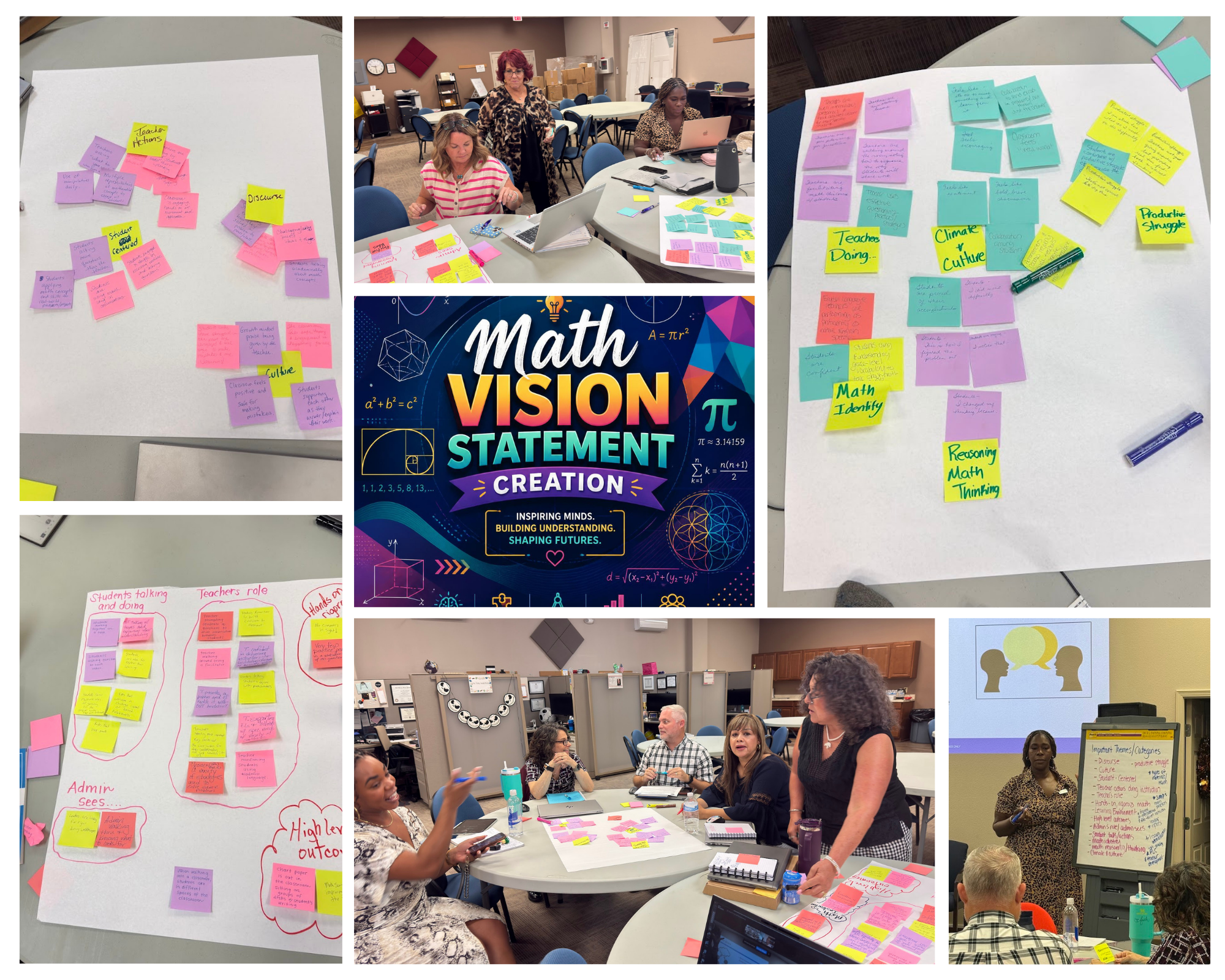
In collaboration with SchoolKit, we analyzed our district walkthrough data from the previous school year to craft the SWREC Math Vision for the upcoming academic year. This data-driven vision establishes clear instructional targets and continuous improvement goals for mathematics instruction across our region.
Special Education Leadership & Legal Expertise
August provided rich professional learning tailored specifically for special education leaders and practitioners:
- SPED Discipline Toolbox with Elena Gallegos: A comprehensive deep dive into compliant, equitable, and effective discipline practices for students receiving special education services.
- SPED Directors Leadership Training: Featuring legal expert Lorie Gerkey, providing directors with up-to-date guidance on legal compliance, policy updates, and regional leadership strategies.
-
Special Education Teacher Series — One Team, One Student: MLSS Referral & Child Find:
Discover how Multi-Layered Systems of Support (MLSS) and Child Find work together to identify and support students who may have disabilities. Participants examined the distinction between intervention and evaluation, understood legal referral obligations, and learned when a referral for special education evaluation is appropriate.
Leadership Academy: Setting the Stage for Admin Success
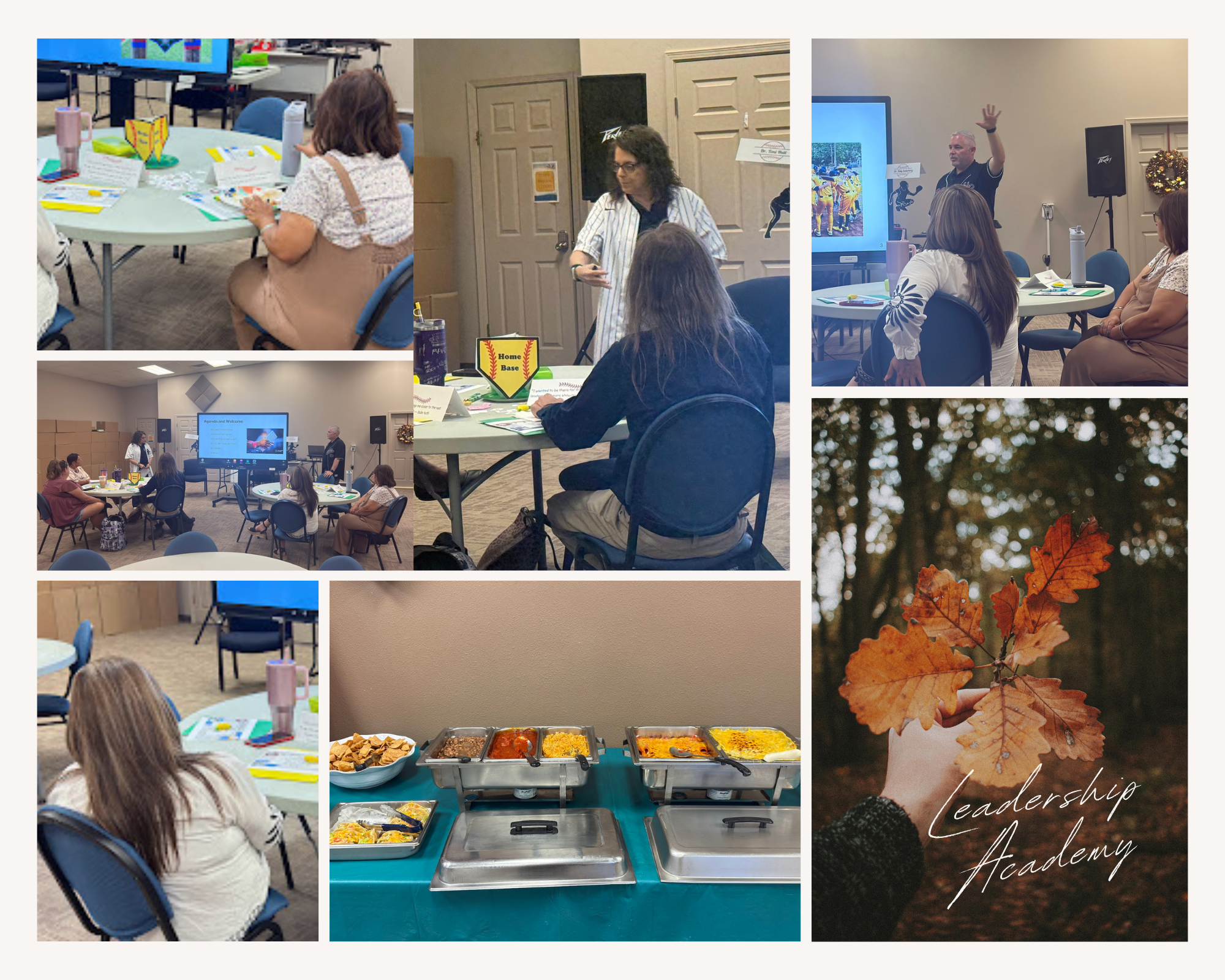
We rounded out the month with our dynamic Leadership Academy, featuring an engaging "Banana Ball" Baseball theme! Administrators gathered to unpack the EXCEL Rubric for Admin Success, exploring leadership indicators designed to set the stage for administrators to be successful in their roles.
Ongoing Educator Mentorship & Coaching
Throughout this action-packed month, our New Teacher Mentor Program remained active between major training events. Our instructional coaches provided targeted, one-on-one coaching, classroom observations, and actionable feedback for Year 1, Year 2, and Year 3 teachers, ensuring continuous, personalized growth for every educator we serve.
Thank you to all educators, staff, and administrators across our region for an amazing start to the school year! Let’s carry this momentum forward! 🚀✨
Upcoming Trainings
September 2026 Schedule
Executive Functions and Organized Binder
SPED Directors Leadership Academy
Understanding and Using the NMTEAM
One Team, One Student: Informed Consent
CPI Refresher (Multi-District)
K-3 Math Training
4-12 Math Training
Math Leadership Training
CPI Initial Training (Multi-District)
One Team, One Student: Evaluation
Building Better Classrooms Day One
Spotlight on High-Quality Math Instruction
SWREC and SchoolKit are partnering to elevate mathematical achievement across New Mexico. We are building deep content knowledge, empowering instructional leadership, and supporting district implementation with hands-on learning and participant stipends.
SWREC Regional Vision for High-Quality Math Instruction
We believe every student deserves access to rigorous, grade-level mathematics instruction grounded in High-Quality Instructional Materials (HQIM). Students must have opportunities to explore, productively struggle, and engage in meaningful mathematical discourse.
School & District Leaders Will:
- Establish and communicate a shared vision for equitable math instruction.
- Build a positive culture that promotes student agency and productive struggle.
- Protect time for HQIM internalization, lesson prep, and student work analysis.
- Use focused walkthroughs and evidence to monitor instruction and give actionable feedback.
Teachers Will:
- Deliver engaging, standards-aligned Level-1 math instruction using HQIM.
- Proactively internalize units/lessons to plan for student thinking and misconceptions.
- Provide access to grade-level content via scaffolds and the concrete-pictorial-abstract continuum.
- Foster a safe learning environment where mistakes and curiosity are valued.
Students Will:
- Engage with meaningful tasks and explain, justify, and build on peer ideas.
- Develop number sense, reasoning, and fluid movement across math representations.
- Persist through productive struggle and view mistakes as learning opportunities.
- Build a positive mathematical identity as capable, confident problem-solvers.
Part 1: Collaborative Math Learning Walks
Site SupportTo support year-one math implementation, SWREC instructional specialists and SchoolKit partners will join building leaders for collaborative walkthroughs. Together, we'll identify instructional patterns, highlight success, and surface opportunities for additional support.
Walkthrough agendas and schedules will be delivered to participating sites by September 3.
Part 2: Essentials of Math Instruction (Teacher Professional Development)
🏅 $500 Stipend OfferedA 5-day professional learning series designed to grow content knowledge, teaching expertise, and the ability to implement district-selected HQIM. Teachers who complete all 5 sessions in their grade-level series receive a $500 stipend!
Grades K–3 Math Essentials
Focus: Fostering Positive Identity, Measurement & Data Standards, Core Action 1.
Grades 4–12 Math Essentials
Focus: Identity & Agency, Data, Measurement, Statistics & Probability.
Part 3: Math Instructional Leadership Institute
🏆 $1,000 Stipend OfferedA 6-day hands-on Community of Practice for Central Office Leaders, Building Administrators, and Instructional Coaches. Focuses on unpacking the NM Math Framework 2.0, utilizing the NM Math Implementation Tool, and establishing strong monitoring systems.